The Hidden History of the Piano: 5 Truths That Will Transform Your Listening Experience
Dec. 1st ,2025 Mr. Huscher
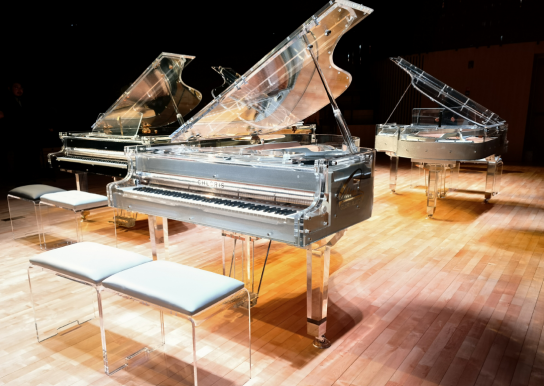
PART 2, The piano did not achieve its fame in concert halls, but rather in salons.
This creative call for a more expressive instrument was initially met not in grand concert halls, but in the intimate settings of private salons. During the mid-to-late 18th-century “galant” period (approximately 1750–1800), the piano underwent a crucial social transformation. It evolved from a mere accompanying instrument into an “independent center of salon life.”
This era marked a shift away from the world of “serious professional musicians” like Bach. Instead, the piano’s popularity was driven by the rise of amateurs and art connoisseurs. As music increasingly became an integral part of bourgeois family life, the piano found its true home. It was the instrument used to perform opera arrangements, popular songs, and charming character pieces. The significance of this social transformation could arguably rival any technological innovation. It solidified the piano’s place as a household fixture, cultivated an audience with emotional literacy, and laid the foundation for an even greater revolution in musical expression.
PART 2, Beethoven did not merely compose sonatas—he shattered them.
The piano’s proliferation in domestic settings gave rise to a new kind of audience, one whose relationship with music was personal and emotional. This provided the fertile ground in which Ludwig van Beethoven ignited his revolution. His genius lay not in perfecting the elegant, balanced classical sonata form inherited from Mozart and Haydn, but in fundamentally breaking it apart to serve a radical, entirely new purpose of personal expression.
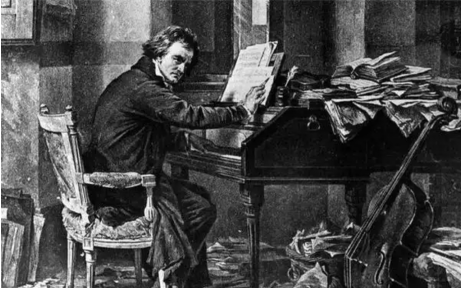
To truly understand Beethoven, one must not view his music merely as a formal exercise, but rather as a direct “language.” His works are not simply collections of pleasing melodies structured according to conventional forms; they are passionate, dramatic narratives. As one contemporary insightfully noted: “Through this man, music spoke in words, not in images.” For Beethoven, emotional and psychological content became the primary driving force, with form forced to submit to his will.
In essence, his oeuvre represents the “history of the destroyed sonata form.” This revolutionary act marked a decisive shift from the intellectual clarity of the Classical ideal toward the turbulent, passionate subjectivity of Romanticism. Beethoven taught the piano to speak a new language—one of inner turmoil, triumph, and profound human emotion.





Mail:info@chlorispiano.com
Tel:86-18121133783
www.chlorispiano.com
技术支持:网新科技(www.ibw.cn) 沪IPC 备14053625号