Physical Mechanism of Piano Tone Formation and Its Influencing Factors (Final)
Feb. 15th,2026 Mr. Huscher
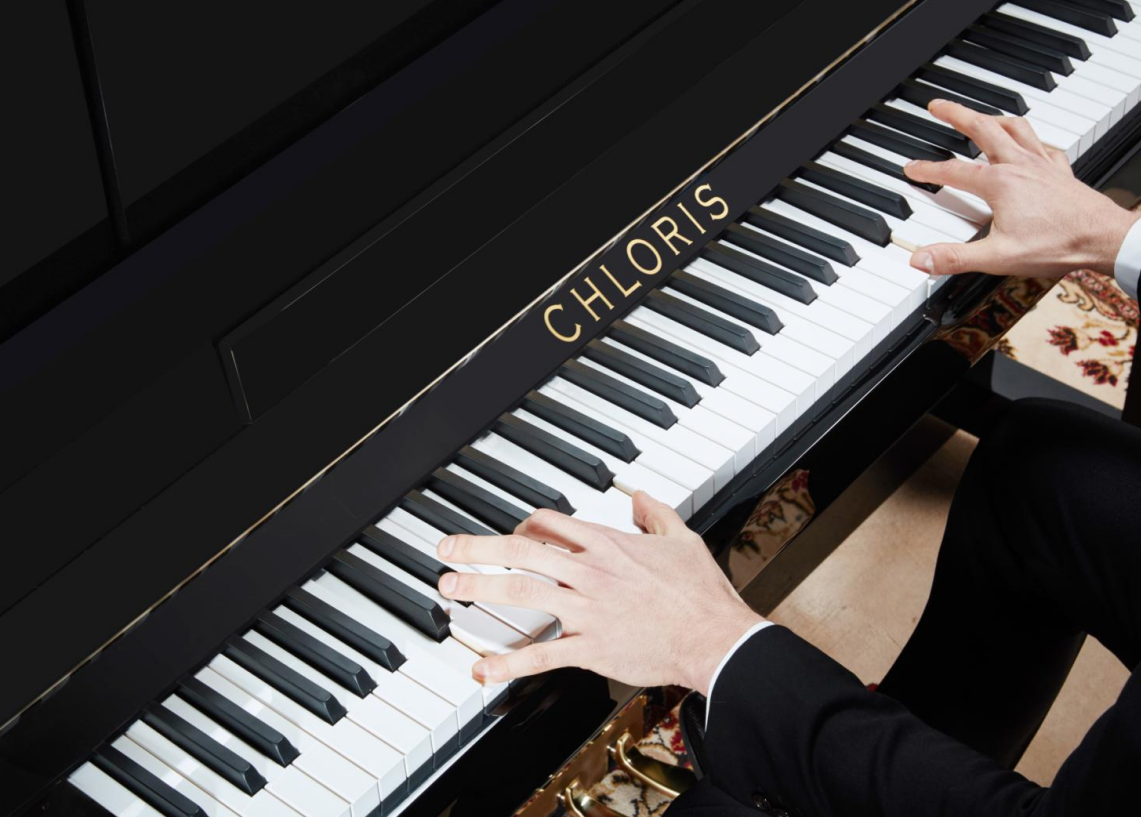
The Performer's Touch
Whether a performer's touch affects piano tone has been a subject of debate, but touch does indeed influence timbre.
Touch Velocity: This is the most significant factor in altering tone. As mentioned earlier, velocity determines the degree of hammer compression, which in turn affects the brightness of the tone.
Touch Articulation (Legato vs. Staccato): Although the hammer is in free flight before striking the string, simulations and experimental evidence suggest that different touch articulations (such as staccato and legato) excite distinct vibration modes in the hammer shank or produce varying levels of mechanical impact noise (hammer knock), thereby subtly modifying the spectral structure of the tone.
Post-Key-Release Sound Control: Only by controlling the timing of damper return—either through the pedal or finger release—can the decay process of the sound be influenced. The sound itself, once produced, cannot be altered.
Other Structural Factors
Bridge: The mass of the bridge and the design of its base affect the transmission of high-frequency energy. The notching of the bridge and the positioning of the bridge pins also influence the effective speaking length of the strings and the efficiency of energy transfer.
Cabinet and Reflection: The massive rim of the piano not only provides structural support but also reflects sound waves back toward the soundboard, contributing to overall resonance.
Aging and Maintenance: Over time, the crown of the soundboard may collapse, and the cellular structure of the wood may change, leading to a deterioration in tone—typically manifesting as a duller sound or shorter sustain.
Conclusion:
Piano tone is determined by the combined effects of the hammer's non-linear excitation, the inharmonicity of string vibration, and the complex radiation characteristics of the soundboard. The performer controls the hardness response of the hammer through touch velocity, thereby adjusting the richness of the overtone series (i.e., the brightness or darkness of the timbre). Meanwhile, the piano maker establishes the instrument's fundamental tonal character through string scaling, hammer strike point selection, soundboard rib layout, and down-bearing pressure settings.





Mail:info@chlorispiano.com
Tel:86-18121133783
www.chlorispiano.com
技术支持:网新科技(www.ibw.cn) 沪IPC 备14053625号