
In the vast constellation of classical music, Chopin forged a piano language entirely his own, opening up a creative path markedly different from that of his predecessors. Earlier composers generally treated the musical theme as a “germ cell” (German: Keimzellen) from which a grand musical architecture could be constructed, relying on the theme’s internal logical drive to propel the work forward layer by layer. Chopin, however, overturned this tradition. His attention turned instead to the “radiating power” (Ausstrahlungen) of melody. Rather than being preoccupied with piling up solid sonic foundations, he devoted himself to a remarkable kind of acoustic magic: transforming the invisible “air” and delicate fragrance surrounding a melody into something tangibly audible, thereby creating for the musical theme a perceptible “space to breathe and exist” (Luft- und Lebensraum).
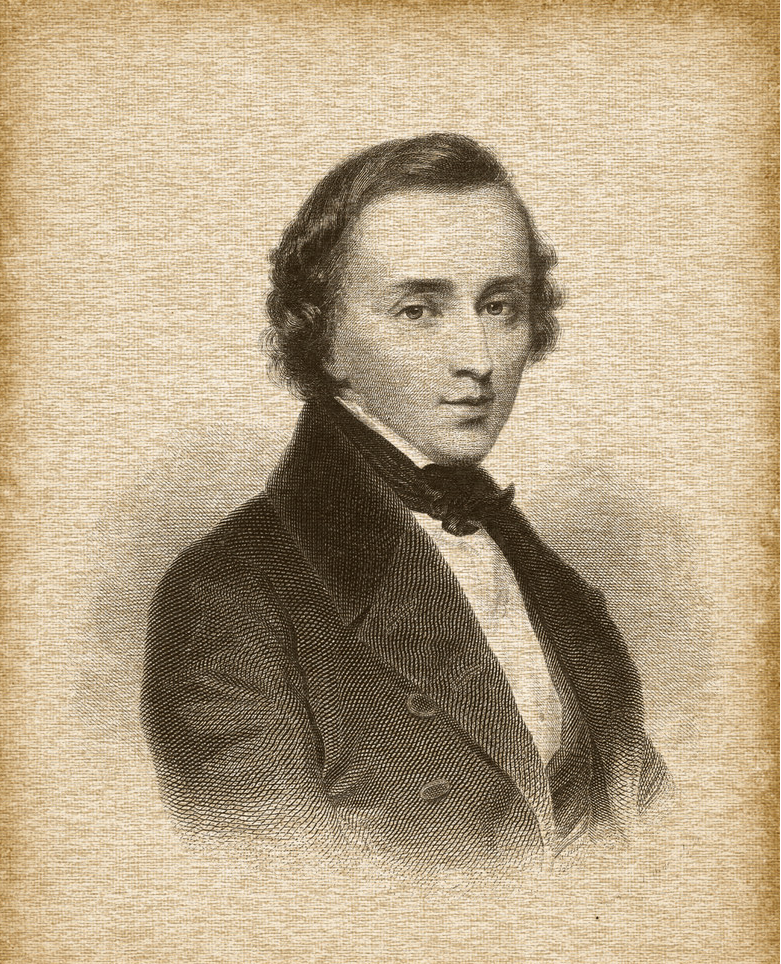
To achieve this extraordinary sense of spatiality, Chopin developed a distinctive set of expressive techniques that might be described as a “playful mechanism” (Spielwerk). Particularly when a theme returns, he often uses these devices to disperse melodies that were originally impassioned or weighty, giving them a lightness and sense of breath. He habitually envelops the melody in tiny ornamental figures and vine-like lines (kleine Figuren und Ranken); inserts trills (Zwischentriller) and ornaments into the spaces between notes; dissolves the hardness of harmony into wave-like broken chords and arpeggios; and liberally scatters rapid chains of notes that skim lightly across the surface, appearing and vanishing in an instant.
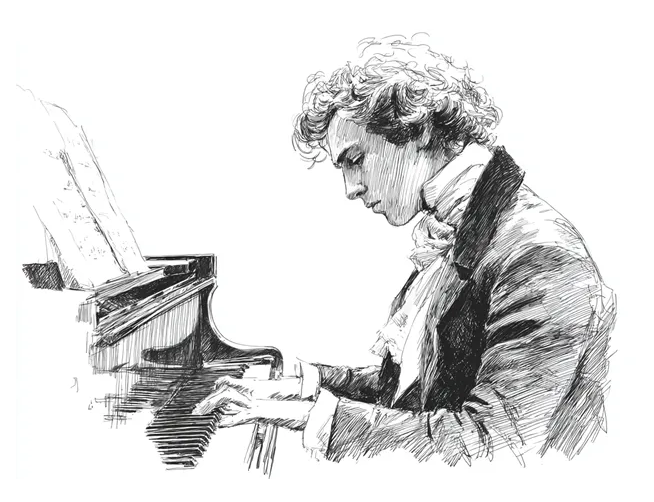
This technique of allowing sound to “dissolve” within the musical texture is by no means an abstract theory suspended in midair. It is a subtle and highly deliberate design founded entirely upon the particular conditions of sound production offered by the modern piano. Chopin explored the acoustic properties of the instrument to their fullest extent: detached from the piano, this sense of “air” could not exist.
This forward-looking approach to musical depiction found almost no direct successors during the Romantic era. Even Liszt’s experiments did not carry it forward in the same way. It was not until more than half a century later, with the emergence of French Impressionist composers led by Debussy, that this creative path—one devoted to the evocation of light, color, and atmosphere—was truly taken up again, confirming the enduring artistic legacy of Chopin across the boundaries of time.





Mail:info@chlorispiano.com
Tel:86-18121133783
www.chlorispiano.com
技术支持:网新科技(www.ibw.cn) 沪IPC 备14053625号